
Data Connectivity Layer
The Data Connectivity Layer is not merely a technical backbone; it is a strategic enabler of system-wide integration, ensuring that all components of the ecosystem operate as a cohesive, intelligent, and scalable digital economy.
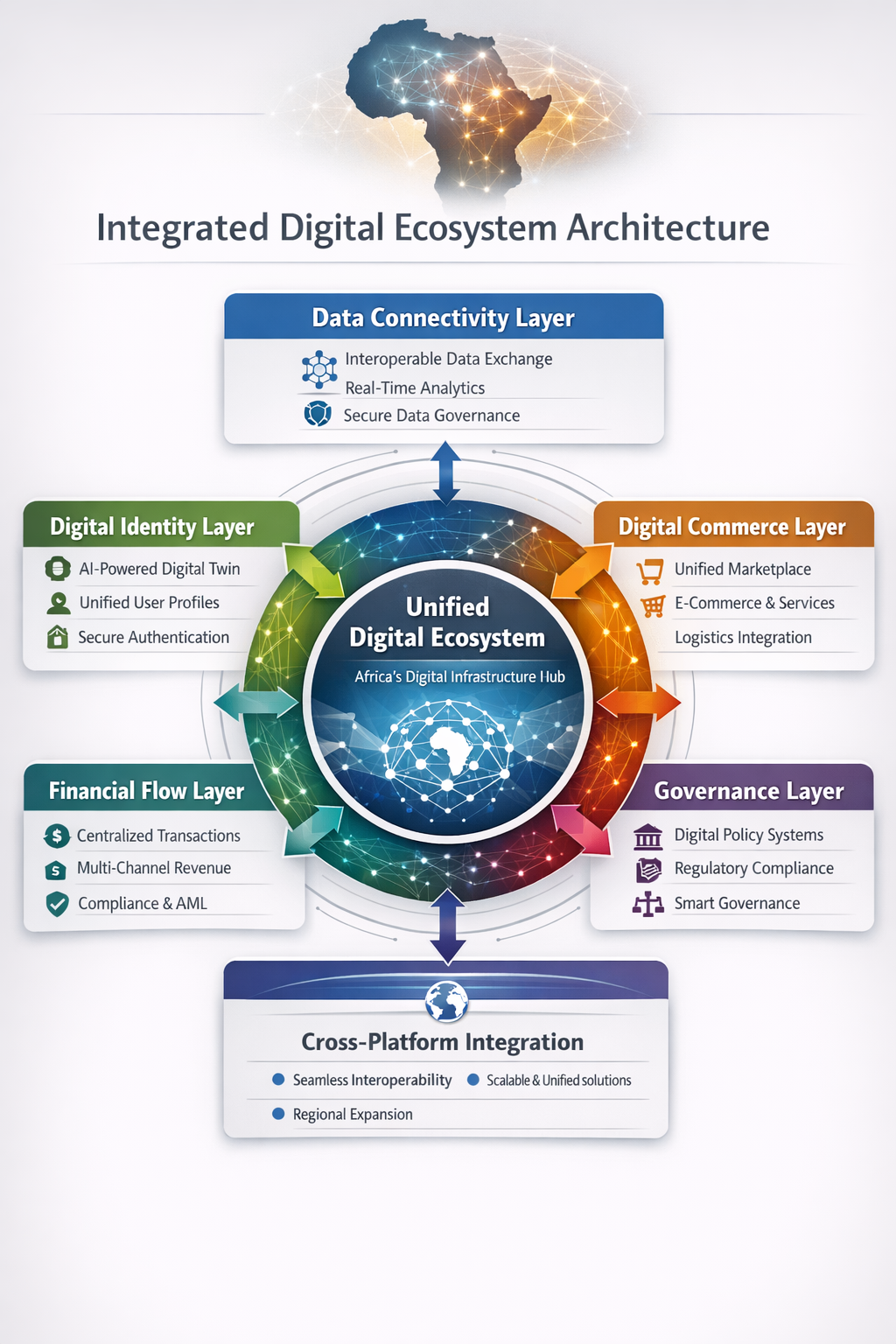
Executive Summary — Data Connectivity Layer
The Data Connectivity Layer serves as the underlying digital fabric of the ecosystem, enabling seamless data exchange, system interoperability, and real-time synchronization across all platforms, services, and stakeholders.
It is designed to transform fragmented data environments into a unified, intelligent, and scalable data infrastructure, supporting the continuous flow of information as a core economic and operational asset.
Key Components
1. Interoperable Data Infrastructure
The ecosystem is built on a standardized data architecture that enables:
Seamless communication between platforms via APIs
Real-time data exchange across sectors
Integration of internal and external systems
This ensures full interoperability across the entire ecosystem.
2. Real-Time Data Processing
The Data Connectivity Layer supports continuous data flow and processing, enabling:
Instant synchronization of user, financial, and transactional data
Real-time analytics and system responsiveness
Dynamic adaptation of services and operations
This creates a live, responsive digital environment.
3. Cross-Platform Data Integration
All ecosystem layers — including Digital Identity, Financial Flow, and Digital Commerce — are interconnected through a shared data framework, allowing:
Unified user profiles and behavioral insights
Integrated financial and commercial data streams
Holistic system intelligence
This eliminates silos and enables system-wide coherence.
4. Data Governance and Control
The system incorporates structured data governance mechanisms, including:
Controlled access and permission layers
Data ownership and usage frameworks
Transparent data lifecycle management
This ensures strategic control over data as a core asset.
5. Security and Compliance
The Data Connectivity Layer is designed in line with international standards, ensuring:
Data encryption and secure transmission protocols
Protection against unauthorized access and cyber threats
Alignment with global data protection principles (e.g., GDPR frameworks)
6. Scalable Architecture
The infrastructure is built to support expansion across regions, sectors, and user bases, enabling:
Integration of new platforms and services
Cross-border data connectivity
Long-term scalability without system fragmentation
Strategic Value
The Data Connectivity Layer enables:
Centralized visibility across all ecosystem activities
Data-driven decision-making and optimization
Enhanced efficiency through system integration
Creation of new value streams from data analytics
Stronger coordination between economic, technological, and institutional actors
Positioning
This model represents a shift toward:
“Data as a Core Infrastructure Layer”
— where data is not a byproduct, but a strategic resource that drives intelligence, coordination, and economic value.
Conclusion
The Data Connectivity Layer is not merely a technical backbone; it is a strategic enabler of system-wide integration, ensuring that all components of the ecosystem operate as a cohesive, intelligent, and scalable digital economy.
Our Services
Connecting Africa through seamless digital infrastructure.


Digital Identity
Secure authentication and cross-platform verification.
Financial Flow
Integrated fintech for payments and transactions.
Data Connectivity
Cloud infrastructure enabling scalable data exchange.
The African Digital Canal™ Platform
Stay updated on Africa’s digital future